Choosing the Right RNA Analysis Methods: Genome-wide RNA-Seq vs. NanoString nCounter® vs. Targeted RNA-Seq Panels
5:11
SHARE
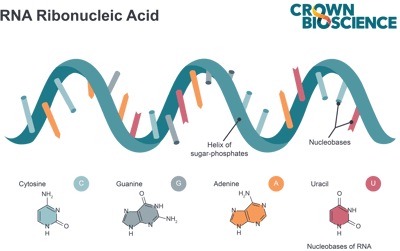
In the world of RNA analysis, researchers have an array of technologies at their disposal. Each method comes with its unique strengths, making the choice dependent on specific research needs and constraints. In this post, we'll delve into three popular RNA analysis methods— transcriptome-wide RNA-Seq, NanoString nCounter®, and targeted RNA-Seq panels—comparing their features and discussing when to use each.
Transcriptome-wide RNA-Seq: The Comprehensive Approach
What It Is: Transcriptome -wide RNA sequencing (RNA-Seq) offers a comprehensive view of the transcriptome. By sequencing the entire RNA content of a sample, this method can detect both known and novel transcripts, including splice variants, fusion genes, and non-coding RNAs.
Advantages
Broad Coverage: Captures a wide range of transcripts, providing a complete picture of gene expression.
High Sensitivity: Detects low-abundance transcripts and novel RNA species.
Versatility: Suitable for various applications, from differential gene expression analysis to transcriptome assembly.
Limitations
Cost: Higher sequencing depth and data analysis requirements can make it expensive.
Complexity: Requires extensive bioinformatics support for data processing and interpretation.
When to Use
Discovery Phase: Ideal for exploratory studies where the goal is to identify novel transcripts or understand the full complexity of the transcriptome.
Comprehensive Profiling: Useful when a broad overview of gene expression changes is needed, such as in cancer research or developmental biology.
NanoString nCounter: The Simplicity and Precision Approach
What It Is: The NanoString nCounter platform uses digital molecular barcodes to directly count mRNA molecules. This method does not require amplification or reverse transcription, reducing potential biases and preserving sample integrity.
Advantages
Direct Quantification: Provides accurate and reproducible measurements of RNA abundance without the need for amplification.
Ease of Use: Simple workflow with minimal sample preparation and hands-on time.
High Precision: Ideal for validating gene expression changes identified in other studies.
Limitations
Limited Multiplexing: Can only measure up to a few hundred genes simultaneously, which may be a constraint for comprehensive studies.
Predefined Panels: Restricted to predefined or custom panels, limiting the flexibility to explore unexpected findings.
When to Use
Validation and Verification: Excellent for validating RNA-Seq or microarray results due to its precision and reproducibility.
Focused Studies: Suitable for studies targeting a specific set of genes, such as biomarker validation or pathway analysis.
Targeted RNA-Seq Panels: The Targeted Approach
What It Is: Targeted RNA-Seq panels focus on sequencing a predefined set of genes or transcripts of interest. This approach leverages the power of next-generation sequencing while concentrating on specific targets, allowing for deep coverage and accurate quantification.
Advantages
High Sensitivity and Specificity: Provides detailed information on a specific set of genes with high depth of coverage.
Cost-Effective: Lower sequencing cost compared to whole-transcriptome RNA-Seq due to the targeted nature.
Scalable: Can be customized to include genes of interest relevant to the study.
Limitations
Limited Scope: Only provides data on the selected genes, missing out on broader transcriptomic changes.
Panel Design: Requires careful design and validation of the targeted panel.
When to Use
Focused Research Questions: Ideal for studies with a predefined focus, such as examining a particular pathway or validating biomarkers.
Clinical and Translational Research: Useful in clinical settings where targeted information is needed for diagnosis or treatment decisions.
Comparison Table
Feature
Transcriptome-wide RNA-Seq
NanoString nCounter
Targeted RNA-Seq Panels
Coverage
Broad, entire transcriptome
Limited to selected genes
Focused on predefined genes
Sensitivity
High
Moderate to High
High
Cost
High
Moderate
Moderate to Low
Ease of Use
Complex
Simple
Moderate
Data Analysis
Requires extensive bioinformatics
Minimal bioinformatics required
Requires moderate bioinformatics
Multiplexing Capacity
High
Limited (few hundred genes)
High (depends on panel design)
Ideal For
Exploratory studies, novel transcript discovery
Validation, precise quantification
Focused studies, clinical research
Sample Requirements
High
Low
Moderate
Flexibility
High
Limited to predefined panels
High, customizable panels
Making the Right Choice
When deciding between genome-wide RNA-Seq, NanoString nCounter, and targeted RNA-Seq panels, consider the following factors:
Research Goals
Budget
Data Complexity
Sample Size and Availability
Are you in the discovery phase, validating findings, or focusing on specific genes?
What are the financial constraints of your project?
Do you have the bioinformatics resources to handle large datasets, or do you prefer a more straightforward approach?
How much sample material do you have, and what is its quality?
Research Goals
Budget
Are you in the discovery phase, validating findings, or focusing on specific genes?
What are the financial constraints of your project?
Data Complexity
Sample Size and Availability
Do you have the bioinformatics resources to handle large datasets, or do you prefer a more straightforward approach?
How much sample material do you have, and what is its quality?
In Conclusion
Use transcriptome-wide RNA-Seq
Opt for NanoString nCounter
Choose targeted RNA-Seq panels
For comprehensive, exploratory studies where capturing the full transcriptome is crucial.
When precision and simplicity are needed, especially for validating results and focused gene expression analysis.
For in-depth analysis of specific genes or pathways, balancing cost and data depth.
Use transcriptome-wide RNA-Seq
For comprehensive, exploratory studies where capturing the full transcriptome is crucial.
Opt for Nanostring nCounter
When precision and simplicity are needed, especially for validating results and focused gene expression analysis.
Choose targeted RNA-Seq panels
For in-depth analysis of specific genes or pathways, balancing cost and data depth.
By carefully considering these factors, you can select the most appropriate RNA analysis method to meet your research needs, ensuring accurate and insightful results. Need some help? Our scientific team is here to help.
Mouse I/O RNA-Seq Panel
NGS-based murine targeted 1080-gene panel for I/O and TME studies
Spatial biology is transforming our understanding of tissue microenvironments, providing unprecedented insights into gene expression and protein inter…
Gene editing has become a cornerstone of modern molecular biology, with applications ranging from basic research to clinical therapies. While traditio…
The speed at which we can translate scientific discoveries in oncology research into tangible treatments is crucial. The future of cancer treatment li…



 In the world of RNA analysis, researchers have an array of technologies at their disposal. Each method comes with its unique strengths, making the choice dependent on specific research needs and constraints. In this post, we'll delve into three popular RNA analysis methods— transcriptome-wide RNA-Seq, NanoString nCounter®, and targeted RNA-Seq panels—comparing their features and discussing when to use each.