The Next Wave Prostate Cancer Therapies: From AR Resistance to Novel Targets and Therapeutic Modalities
14:01
SHARE
Advances in hormonal therapies, precision medicine, radiopharmaceuticals, and molecular diagnostics have expanded treatment options for prostate cancer across multiple disease stages. Yet despite these breakthroughs, advanced prostate cancer, particularly metastatic castration-resistant prostate cancer (mCRPC), remains a major clinical challenge.
As researchers gain a deeper understanding of prostate cancer biology, drug development is shifting toward novel targets, innovative therapeutic modalities, and biomarker-driven treatment strategies. Emerging prostate cancer therapies are increasingly designed to overcome resistance mechanisms and address tumor heterogeneity.
The Current Treatment Landscape in Prostate Cancer
Modern prostate cancer treatment is built on several therapeutic pillars.
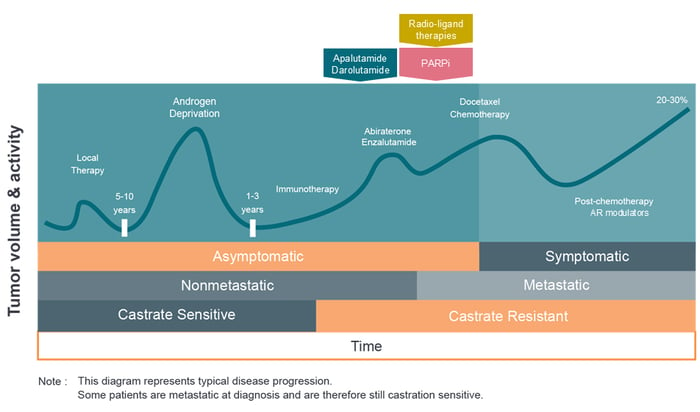
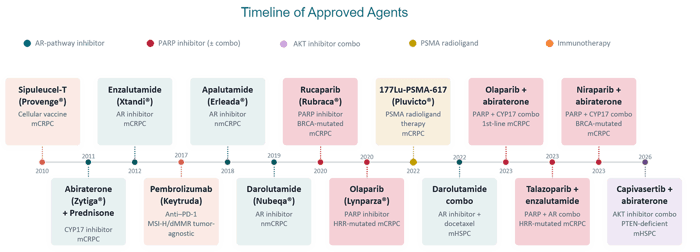
Hormonal therapies and androgen receptor (AR) pathway targeting: Androgen deprivation therapy (ADT) remains the main treatment for advanced prostate cancer. Newer drugs that more strongly block the AR pathway, including enzalutamide, apalutamide, darolutamide, and abiraterone, have improved disease control by further reducing androgen signaling. However, prostate cancer can adapt to these treatments, and resistance often develops, especially in mCRPC.
Chemotherapy: Taxane-based chemotherapy agents, including docetaxel and cabazitaxel, continue to play an important role in metastatic prostate cancer treatment. Chemotherapy can help overcome certain resistance mechanisms and remains a standard option for patients whose disease progresses on hormonal therapies.
PARP inhibitors in molecularly selected populations: The development of PARP inhibitors, such as rucaparib, olaparib, and talazoparib, can benefit patients whose tumors have defects in DNA repair genes like BRCA1 and BRCA2. However, these genetic changes are only found in some patients, so PARP inhibitors are not suitable for everyone with prostate cancer.
Radiopharmaceutical and radioligand approaches: The success of prostate cancer radioligand therapy has generated considerable excitement within the field. Prostate-specific membrane antigen (PSMA)-targeted therapies, such as Pluvicto, have demonstrated the potential to selectively deliver radiation to tumor cells while minimizing exposure to healthy tissue.
Immunotherapy in limited contexts: Although immunotherapy has transformed treatment in several solid tumors, its impact on prostate cancer has been more limited due to the immunological cold tumor microenvironment. Current applications are largely restricted to specific molecular subsets, such as tumors with microsatellite instability-high (MSI-H) status or mismatch repair deficiency treated with pembrolizumab or autologous cell-based immunotherapy (i.e., Sipuleucel-T).
Novel Targets & combinations: The latest combination with abiraterone is a first-in-class AKT inhibitor capivasertib, which is the only targeted treatment for phosphatase and tensin homolog (PTEN)-deficient metastatic hormone sensitive prostate cancer.
Despite substantial improvements in disease control, treatment resistance eventually develops in most patients with advanced disease, highlighting the need for novel prostate cancer treatments capable of addressing evolving disease biology.
Why the Field Is Shifting
Precision medicine and biomarker-driven treatment: Ongoing research continues to identify novel molecular targets, genomic alterations, and signaling pathways that may support more personalized therapeutic decisions. STEAP1, B7-H3, KLK2, and DLL3 are attracting interest across different therapeutic modalities. Their clinical relevance may depend on disease state, antigen density, subcellular localization, and whether expression is retained following treatment and lineage evolution. KLK2 is another prostate-restricted antigen attracting interest in targeted therapeutic approaches, particularly immune-engaging strategies. Its expression pattern and relationship to AR biology make it particularly interesting in the context of prostate cancer-specific targeting. As biomarker-driven development advances, patient selection and treatment optimization are expected to improve substantially.
This shift reflects a broader recognition that future advances will likely require a deeper integration of molecular biology and clinical development.
Emerging Therapeutic Strategies
The growing emphasis on emerging prostate cancer therapies reflects the limitations of existing treatment paradigms. As a result, research efforts are expanding beyond traditional hormonal strategies toward new therapeutic targets and modalities, overcoming resistance and improving long-term outcomes through drug combinations.
Next-generation AR therapies: New treatments are being developed to remove the AR protein entirely rather than simply block its activity. AR degraders such as gridegalutamide are designed to destroy AR proteins, including resistanceassociated variants (e.g., the ARV7 splice variant) that emerge during treatment, and may help overcome some of the key resistance mechanisms seen with current hormonal therapies., RIPTACs, molecular glues, and N-terminal domain (NTD) anti-androgens are also emerging.
DDR and synthetic lethality: PARP inhibitors marked the biggest wave of new targeted approvals at the start of the decade with biomarker selection and combination strategies with anti-androgens. Other DDR pathway targets that are actively pursued include WEE1 and CHK1 inhibitor combinations, ATR kinase inhibitors, and POLQ inhibitors.
Lineage plasticity/epigenetic therapies: As mentioned in an earlier blog, a subset of tumors can undergo epigenetic reprogramming or lineage switching to more aggressive neuroendocrine prostate cancer (NEPC), which has reduced AR dependence and resulted in fewer treatment options. Inobrodib is a first-in-class p300/CBP inhibitor, and Tasemetostat targets EZHZ to prevent lineage plasticity and help prevent the emergence of resistance.
Advances in radioligand therapy: PSMA remains one of the most important targets in prostate cancer; however, some latestage tumors downregulate PSMA following prolonged antiandrogen treatment. As a result, moving beyond PSMA is essential for nextgeneration targeted therapies such as radioligand therapy, as well as expanding beyond βemitters like lutetium177 toward αemitters. B7H3 is one of the most promising emerging radioligand targets, as it is overexpressed in aggressive prostate cancers, along with STEAP1 and KLK2, which are also attractive prostatespecific targets, helping to spare normal tissue.
Growth of ADCs: ADCs combine tumor-targeting antibodies with potent cytotoxic payloads, enabling selective delivery of therapy to cancer cells. Multiple ADC programs targeting PSMA, B7-H3, STEAP1, and other prostate cancer–associated antigens are currently under investigation. Next generation ADCs include dual targeting (i.e., PSMA+STEAP1) to overcome heterogeneity, dual payloads, or degrader-antibody conjugates (DACs).
Emerging immune-based therapies: Significant research is focused on immunotherapy strategies beyond immune checkpoint inhibitors, particularly T-cell engagers that redirect immune cells toward tumor-specific antigens, such as PSMA, B7-H3, KLK2, STEAP1, and DLL3, which is highly expressed in NEPC. Other approaches, including cellular therapies, immune modulators, and multi-target immune strategies, are also being explored to generate stronger and more durable antitumor responses.
Taken together, these emerging strategies reflect a shift toward more precise, targeted, and multimodal treatment approaches, with the potential to transform the future management of advanced prostate cancer.
Resistance Mechanisms Shaping Therapy Development
Therapeutic resistance remains one of the biggest challenges in mCRPC. Today, many of the most promising therapies in development are specifically aimed at addressing biological adaptations that enable tumor survival.
AR Pathway Reactivation: AR signaling remains active in many resistant tumors through mechanisms such as receptor amplification, mutation, splice variants, and alternative activation pathways.
Lineage Plasticity and Neuroendocrine Transition: Lineage plasticity allows prostate cancer cells to change into different cell types that rely less on androgen signaling. This process can sometimes lead to NEPC, a highly aggressive form of the disease with few effective treatment options.
Genomic Evolution Under Treatment Pressure: As tumors adapt to therapy, ongoing genomic evolution can generate resistant clones that drive disease progression.
Tumor Microenvironment Influences: Interactions between tumor cells and the surrounding microenvironment can influence treatment sensitivity, immune activity, and metastatic behavior.
Immune-Cold Biology: Many prostate cancers exhibit immune-cold characteristics, including limited immune cell infiltration and reduced immunogenicity. These features help explain the modest efficacy of immunotherapy observed in many patients.
Researchers are working to better understand why some tumors do not respond to treatment and why others become resistant over time. This knowledge can help identify the right patients for specific therapies, improve biomarker development, and guide the design of more effective treatments.
Future Focus on Combination Therapies
Because treatment resistance is driven by multiple biological mechanisms, future treatment strategies will likely rely on rational combinations of therapies. Potential approaches include combining AR-targeted agents with PARP inhibitors, radioligands with immunotherapy, targeted therapies with chemotherapy, or immune-based therapies with hormonal treatments. The goal is to simultaneously address multiple resistance pathways, improve treatment durability, and achieve better long-term outcomes for patients.
Overcoming Translational Challenges in Therapy Development
Developing effective prostate cancer therapies requires navigating a series of translational challenges that can influence whether promising discoveries ultimately benefit patients. Success depends not only on identifying novel therapeutic targets, but also on ensuring that preclinical findings translate into meaningful clinical outcomes. Key considerations include:
Selecting biologically appropriate patient populations: Prostate cancer is a highly heterogeneous disease, with significant differences in molecular drivers, disease stage, and treatment history across patients. Identifying the populations most likely to benefit from a given therapy is essential for maximizing treatment efficacy and reducing variability in clinical trial outcomes.
Matching target biology to therapeutic modality: The choice of therapeutic approach should align with the underlying biology of the target. A clear rationale linking target characteristics to therapeutic mechanism is critical for achieving optimal efficacy and safety.
Incorporating predictive biomarkers: Predictive biomarkers can help identify patients who are most likely to respond to treatment. Integrating biomarker strategies early in development can improve the probability of demonstrating clinical benefits and accelerating decision-making.
Developing preclinical models that reflect clinical disease: Robust preclinical models should capture the biological complexity of prostate cancer, including tumor heterogeneity, metastatic spread, and interactions with the tumor microenvironment. Models that more accurately reflect human disease provide stronger evidence for therapeutic potential and improve translational relevance.
Understanding mechanisms of response and resistance: Evaluating why patients respond, fail to respond, or eventually develop resistance can guide therapeutic optimization and combination strategies. Early investigation of resistance pathways may reveal opportunities to extend treatment durability and inform next-generation drug development.
Aligning preclinical endpoints with clinical objectives: Preclinical studies should be designed with clinically meaningful outcomes in mind. Aligning laboratory endpoints with measures that are relevant to patient benefit (such as tumor control, survival, or biomarker changes) can strengthen the predictive value of preclinical data and support more informed clinical development decisions.
Addressing these challenges early and systematically can strengthen the translational pathway from discovery to clinical application, improve trial success rates, and ultimately increase the likelihood of delivering effective new treatments for patients.
Conclusion
The next generation of prostate cancer therapies is not defined by a single target or modality, and is expanding beyond AR-directed therapy toward radioligands, ADCs, immune engagers, cell therapies, and epigenetic approaches. Biomarker-driven model selection will become increasingly important for generating translational evidence and making confident development decisions.
Ultimately, successful drug development for prostate cancer will depend on combining biological insight with robust translational research, predictive biomarkers, and clinically relevant preclinical models. Together with advances in the understanding of mutations, disease biology, resistance mechanisms, and therapeutic targets, these innovations are laying the foundation for more effective and personalized prostate cancer therapies.
Next, the discussion turns to preclinical models, which are essential tools for advancing the understanding of prostate cancer biology and accelerating the development of new therapies.
Frequently Asked Questions
What are the latest therapies in prostate cancer?
Recent advances include PSMA-targeted radioligand therapy, PARP inhibitors for selected molecular populations, next-generation AR-targeting agents, antibody-drug conjugates, and emerging immune-based therapies such as T-cell engagers.
What emerging treatments are being developed for advanced prostate cancer?
Current development efforts focus on androgen receptor degraders, novel radioligands, STEAP1-targeted therapies, B7-H3-targeted therapies, antibody-drug conjugates, T-cell engagers, and biomarker-driven precision medicine strategies.
How does resistance affect prostate cancer treatment?
Resistance can develop through AR pathway reactivation, genomic evolution, lineage plasticity, neuroendocrine transition, and tumor microenvironment adaptations. These mechanisms often drive disease progression despite initial treatment response.
What is the role of PSMA-targeted therapy in prostate cancer?
PSMA-targeted therapy enables selective delivery of therapeutic agents to prostate cancer cells expressing PSMA. It is currently an important component of prostate cancer radioligand therapy and remains a major area of clinical development.
What targets are emerging beyond PSMA in prostate cancer?
Emerging targets include STEAP1, B7-H3, and other tumor-associated antigens that may support future targeted therapies, immune-based treatments, and radioligand approaches.
Why are biomarkers important in prostate cancer therapy development?
Biomarkers help identify patients most likely to benefit from specific therapies, improve trial design, support precision medicine approaches, and enable more effective treatment selection.
How do preclinical studies support emerging prostate cancer treatments?
Preclinical studies help evaluate therapeutic efficacy, understand mechanisms of action, identify resistance pathways, assess biomarkers, optimize combinations, and de-risk clinical development before human trials.
Cite this Article
Kumari, R., (2026) The Next Wave Prostate Cancer Therapies: From AR Resistance to Novel Targets and Therapeutic Modalities - Crown Bioscience. https://blog.crownbio.com/the-next-wave-prostate-cancer-therapies
Choosing the right preclinical immuno-oncology model makes or breaks your development decisions, but navigating the options is rarely simple. In this …
Immuno-oncology (IO) combination strategies depend on more than promising target biology. Translating a hypothesis about synergistic immune activation…
A review of Xie et al., "The molecular similarity landscape of preclinical cancer models to patient tumors," JCI Insight (2026) Model selection is one…